It's rarely (never) a good idea to make significant updates to a live site - minor content tweaks maybe - but updates to plugins, themes or core files should all be tested on a staging version of your site - to ensure nothing breaks - before being pushed to live.
Softaculous Apps Installer includes the ability to create a staging copy of your site - and then track file & database changes - so these can be pushed back to the live site once you're sure everything is working as you expect.
In this article, we are going to create a WordPress staging site. Prior to starting this, I have set up the sub-domainstaging to receive the staged site. You may also want to apply a Let's Encrypt SSL certificate to the staging domain to maintain HTTPS. This staging process is similar for all other Softaculous managed applications.
You can only stage sites that are already managed within your local Softaculous Apps Installer. We have a separate guide on Importing applications into Softaculous.
Always make sure you have a good backup of your site before making any changes - so you can roll-back if anything goes wrong.
Staging copies the application as Softaculous has it recorded. Files that a plugin keeps outside the installation - a security plugin's .user.ini or wordfence-waf.php, for example - may not come across. If your staged site loads with an error or a blank white screen, missing files of this kind are the most likely cause.
Creating the Staging site
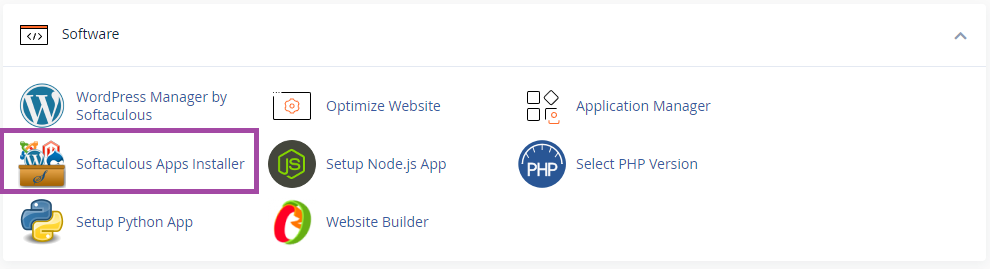
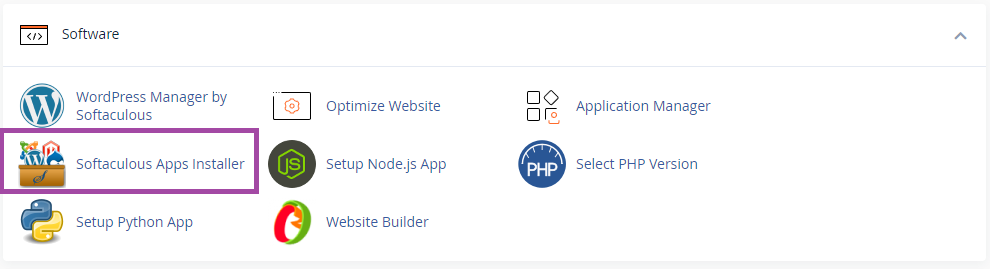
Open the Softaculous Apps Installer from the Software section of cPanel
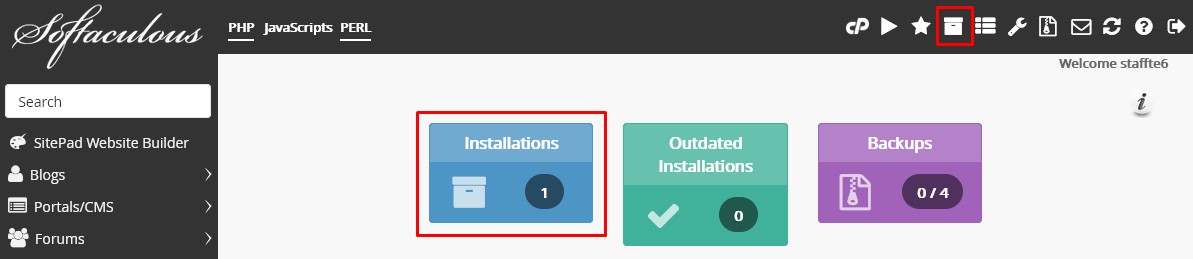
Click the All Installations icon in the toolbar at the top, or the My Apps button on the application's own page.
From the list of your installed applications click the Staging icon next to the site you'd like to work with.
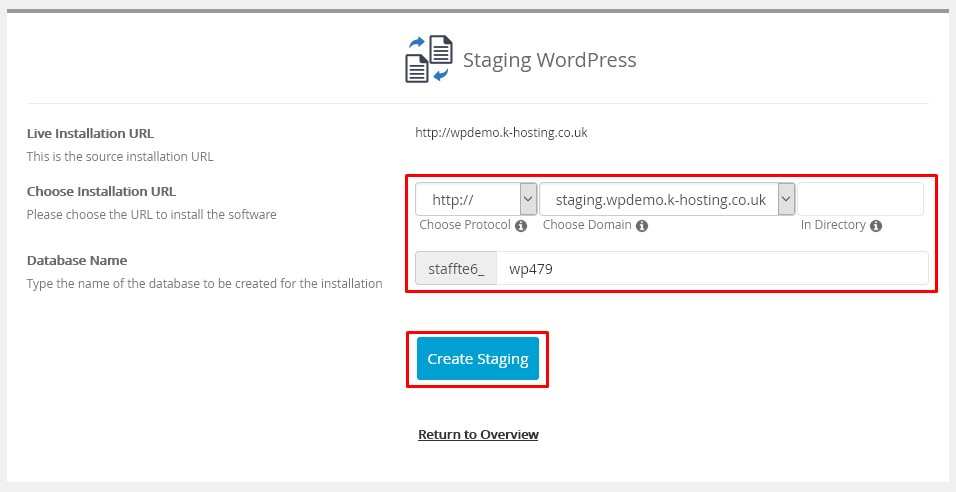
On the Staging screen choose the appropriate details from the drop-down options:Choose Installation URL - Protocol, Domain and optional directory Database Name - can be changed here if necessary Disable Search Engine Visibility - tick this. Your staging site sits on a public URL, and without it search engines can index the copy alongside your live site. Click the Create Staging button to complete the process.
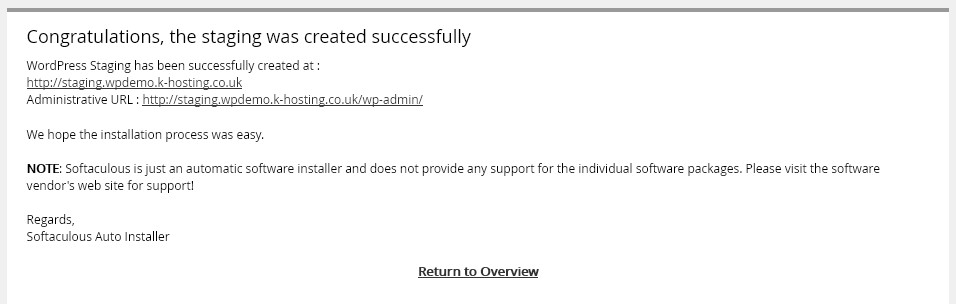
You'll see a success notice once the staging has completed.Click Return to Overview to get back to the WordPress installations dashboard.
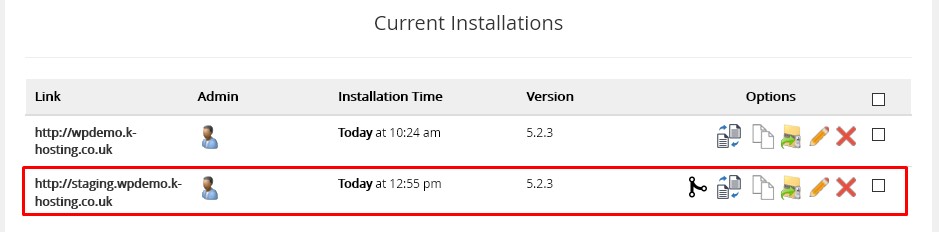
You'll see the newly staged site under Current Installations.- The URL under the Link column will take you to the site homepage (if you've updated your DNS). See our article on viewing your website before updating DNS to test the new site. - The person icon under the Admin column is a one-click link to the WordPress admin dashboard - you will be automatically logged in.
Pushing changes from Staging back to the original site
Once you're finished making your changes on the Staging site you'll be ready to push them back to live.
You may need to apply some caution here. If you are running an e-commerce site, or collect data from clients that gets stored in your sites database - you need to ensure you don't overwrite any data collected between when you created the staging site and when you push back the changes.
If you are concerned about this it would be better to put your live site into maintenance mode, create the staging site, make any changes and then push them back - then, once complete, remove the site from maintenance mode.
If you are confident you know what you are doing the staging process does let you select specific database tables.
Open the Softaculous Apps Installer from the Software section of cPanel
Click the All Installations icon in the toolbar at the top, or the My Apps button on the application's own page.
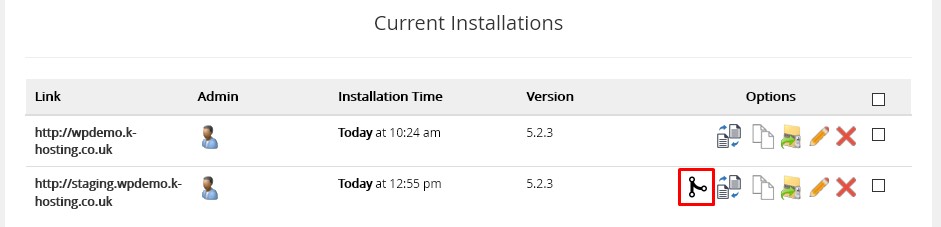
From the list of your installed applications, click the Push to Live icon. It appears on the row for the staging site, not the live one.
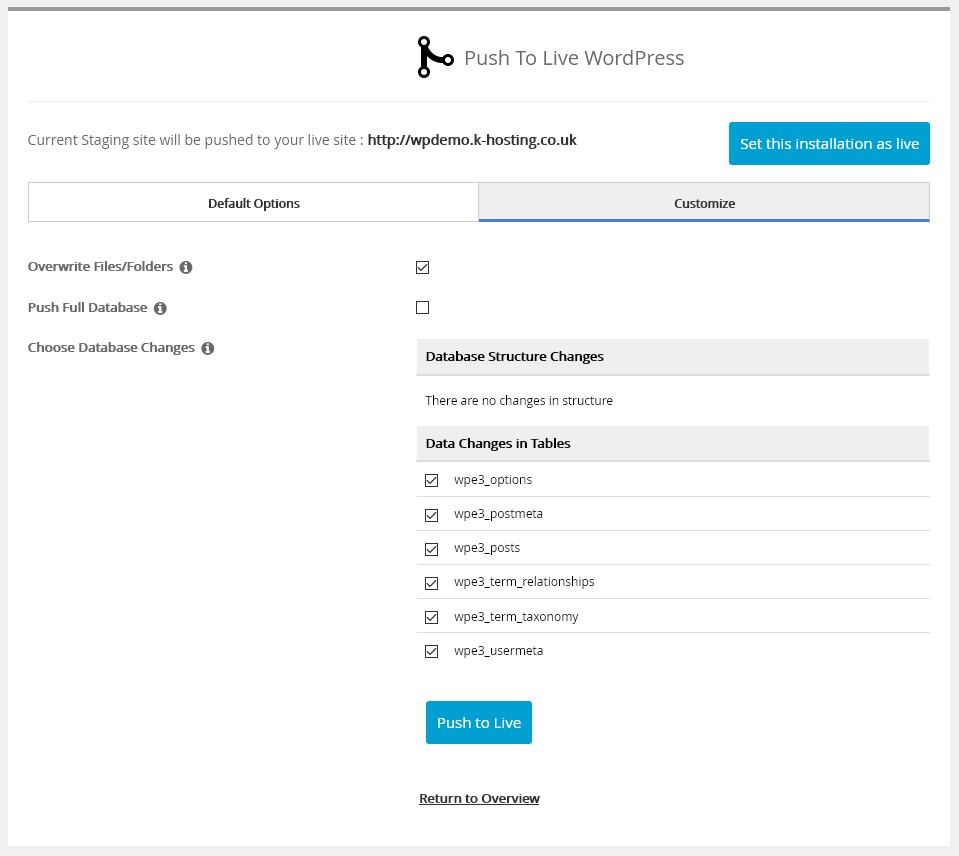
You'll have two options here, either Default Options - This will replace all the files of your live installation with the ones in Staging installation and will erase the live database and import the database from your staging installation. or Customize - where you can choose which database tables to pushIn this example, I have added a plug-in and created a new post. So, I do want to push the files (so the plugin files get transferred) and I'm happy with those database tables for the post. Click Push to Live to complete the process.
For WordPress:
Plugins will retain their active/deactivated state during Staging/Push to Live
Plugins deleted on staging will be deactivated on the live site - but their files will not be removed - you will need to Delete them on live manually.
Remove the staging site when you have finished
Once you have pushed your changes to live, delete the staging installation from Softaculous rather than leaving it in place. A staging copy is a complete WordPress site on a public URL, and an abandoned one stops being updated the moment you stop using it - so it becomes an unpatched way into an account that also hosts your live site. It uses disk space and a database too.
If you stage regularly, delete each copy as you finish with it rather than letting them accumulate.